

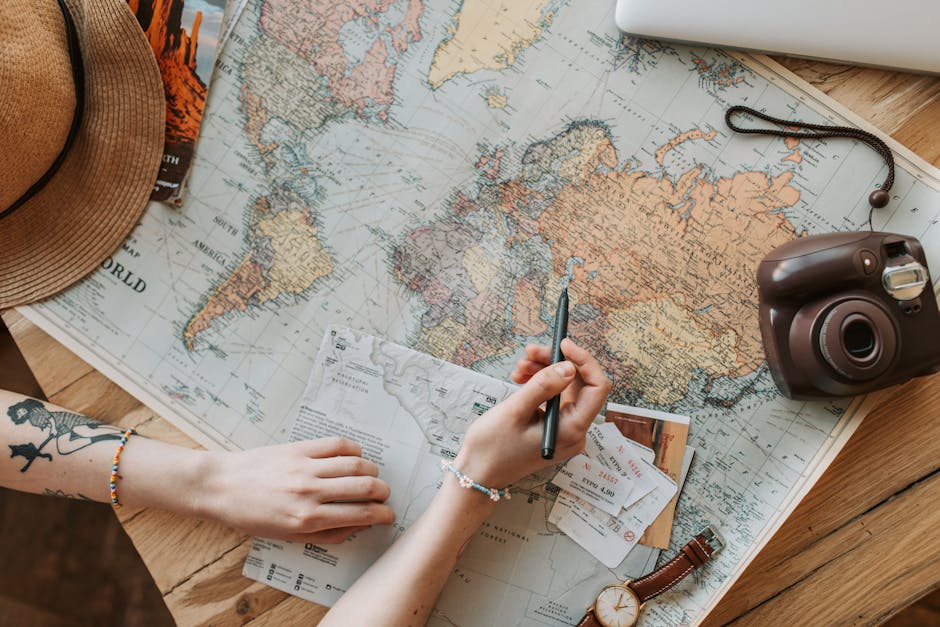
Paris rewards people who plan and punishes those who don't. This guide cuts through the noise to give you the practical framework — when to go, where to stay, what to book in advance, and how to move around the city without wasting half your day.
When to Visit Paris: Crowds, Weather, and the Sweet Spots in Between
The peak months — June, July, and August — bring reliable sunshine but also 30 million other tourists. The Eiffel Tower queue alone can swallow two hours of your day in midsummer. September and October are the insider's choice: the summer rush fades, the light turns golden, and most major attractions are still fully operational. April and May offer blooming gardens and fewer crowds than summer, though rain is a genuine factor. February and March are the cheapest months to fly and book hotels, but some smaller museums and restaurants close for their annual winter break. If your trip is flexible, aim for late September — the weather is still warm enough for outdoor dining, fashion week adds energy to the city, and airfares haven't spiked yet.
Choosing Which Arrondissement to Stay In
Paris has 20 arrondissements, and your choice shapes your entire experience. The 1st and 4th put you at the historical center — the Louvre, Notre-Dame, and the Marais are walkable — but hotel prices reflect that centrality. The 6th (Saint-Germain-des-Prés) is quieter, intellectually charged, and beloved by repeat visitors who want cafés over Instagram moments. The 11th and 12th arrondissements offer a more local, less polished feel with excellent restaurants and direct metro access to everywhere worth going. Avoid booking purely based on a hotel deal in the 15th or 17th unless you've checked how long the commute to central attractions actually takes — it can easily be 40 minutes each way. As a rule, staying within arrondissements 1 through 11 keeps you inside the city's natural rhythm.
What to Book Weeks in Advance (and What You Can Leave to Chance)
Some Paris experiences book out faster than most travellers expect. The Eiffel Tower summit requires timed-entry tickets that often sell out 2–3 weeks ahead in peak season — buy them the moment your dates are confirmed. Versailles is similar; without a booking you risk a two-hour entrance queue on top of a 40-minute train journey. Tickets for the Musée d'Orsay and Musée de l'Orangerie can typically be secured 3–5 days out. Michelin-starred restaurants are a different story: tables at places like Guy Savoy or Septime disappear within hours of the booking window opening, often 30 days in advance. On the other hand, strolling through the Marais, visiting Père Lachaise cemetery, or spending a morning at the Palais Royal gardens requires nothing more than showing up. Concentrate your advance booking energy on the specific venues with timed entry — leave the rest spontaneous.
Navigating Paris: Metro Logic, Zones, and When to Walk Instead
The Paris metro is one of the most efficient urban rail systems in Europe, with 16 lines and over 300 stations. A single t+ ticket covers any journey within zones 1–2, which includes virtually every major attraction in the city. Buy a carnet of 10 tickets at any station window or machine — it's cheaper per ride than individual tickets and saves queue time. The RER B and RER C lines are what you need for CDG airport and Versailles respectively; regular metro tickets do not cover these journeys beyond certain zones. That said, Paris is a genuinely walkable city when you understand its scale. The distance from the Louvre to Notre-Dame is about 25 minutes on foot — and you'll pass the Île de la Cité, Sainte-Chapelle, and Shakespeare and Company along the way. Before defaulting to the metro, check the walking time; you'll often discover that the journey itself is the point.
Budgeting Realistically for Paris
Paris has a reputation for expense that's partly earned and partly myth. The real budget pressure comes from three areas: accommodation, sit-down restaurants, and entrance fees that stack up quickly if you're hitting multiple paid attractions daily. A mid-range hotel in a central arrondissement typically runs €150–€250 per night; budget options in the same zones are hard to find below €100. Food costs are manageable if you eat like Parisians — a crêpe from a street stall or a jambon-beurre baguette from a boulangerie runs €4–€7, while a café lunch with a glass of wine rarely exceeds €20. The Paris Museum Pass (2, 4, or 6 days) pays for itself quickly if you're planning to visit the Louvre, Versailles, Musée d'Orsay, and Sainte-Chapelle — four venues that together would cost roughly €80 individually. Build a daily buffer of €30–€50 for incidentals: metro tickets, an impromptu pastry, a museum gift shop moment, or a Seine-side glass of wine.
Packing and Practical Logistics That Most Guides Skip
Paris is a city of cobblestones and significant walking — on an average sightseeing day you'll cover 8–12 km on foot. Comfortable shoes are not optional; blisters in Paris are genuinely trip-ruining. A compact daypack beats a bulky camera bag: you'll be navigating crowded metro carriages and tight café seating. Electrical outlets in France use type E plugs at 230V — bring a universal adapter if you're coming from the US or UK. French pharmacies (indicated by green cross signs) are exceptionally useful for minor ailments, skincare products, or forgotten toiletries, and they're far cheaper than hotel concierge solutions. Tap water in Paris is safe to drink — carry a refillable bottle and use the city's free drinking fountains to cut down on plastic and cost. If you're travelling in winter, a proper layer is non-negotiable: Paris in January is damp and cold, and the wind off the Seine has a particular bite.
Paris doesn't require a perfect plan — it requires a smart one. Get the big bookings locked early, understand how the city moves, and leave room for the unexpected detours that tend to become the best memories.